Beyond the Numbers
Poverty has a number, but it is not only that. It has a face, a story, a territory and consequences that don’t always fit into a statistic.
On Tuesday, March 31st, Argentina’s National Statistics Institute (INDEC) reported that poverty reached 28.2% of the population during the second half of 2025. But what alarms us is childhood poverty: “Regarding age groups by poverty status, it stands out that 41.3% of people between 0 and 14 years old belong to households below the poverty line.” (Source: INDEC, March 31, 2026)
This number puts the issue back on the agenda, but it also invites us to look beyond the number.
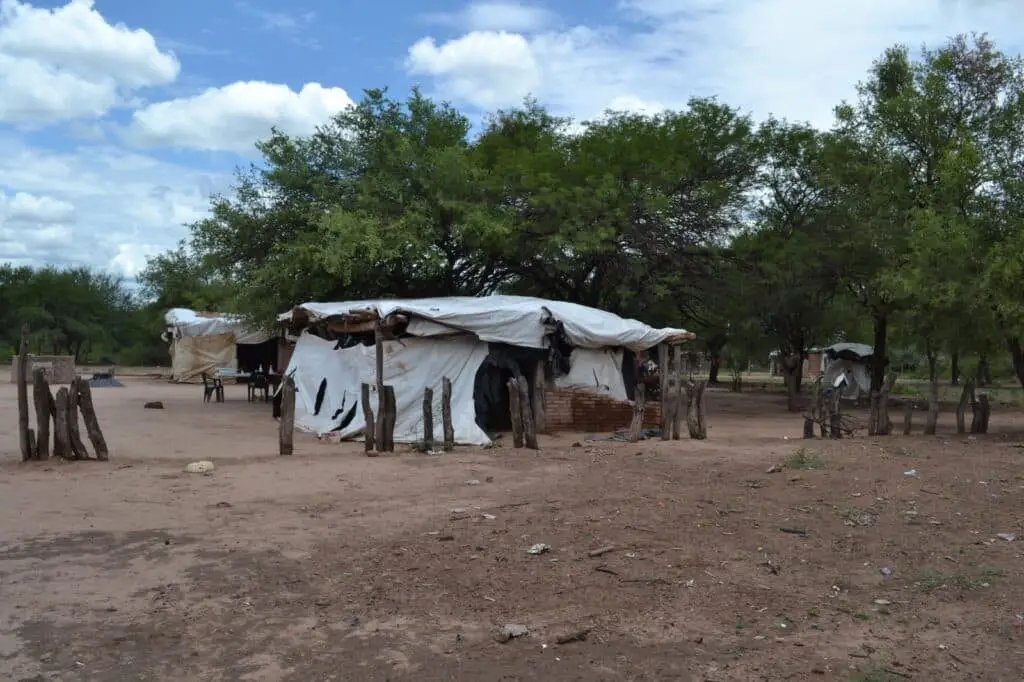
Data and numbers matter. They allow us to see whether the situation has improved, worsened, or stayed the same. They allow us to compare and to grasp the scale. But they are not enough. Because poverty is not only a percentage. It is also a childhood without medical checkups, an adobe house with a straw roof, a family living in overcrowded conditions, an isolated settlement where reaching a doctor remains a daily challenge, the lack of access to electricity and clean water, food insecurity, and the absence of adequate nutrition.
Every time these figures are published, public debate focuses on the number. INDEC measures poverty based on household income and whether it is sufficient to cover a basic food basket. That measurement is essential, but it doesn’t tell the whole story.
In Argentina, there is another kind of poverty ,quieter, and often less visible, that does not change from one semester to the next and does not disappear even when the indicator improves. It is structural poverty: visible in housing conditions, in the lack of access to healthcare, in the distance from basic services, in poor nutrition, in the fragility of education, and in the lack of opportunities inherited from one generation to the next. INDEC also captures part of this reality through its Unsatisfied Basic Needs index, which tracks persistent deprivations related to housing, overcrowding, schooling, and subsistence capacity. According to data from the 2022 Census, 6.7% of households in the country had at least one unsatisfied basic need.
But even those figures don’t always reflect what is happening in the most remote territories. In many rural areas of northern Argentina, poverty does not look like what we see in large cities. It is more extreme, more persistent, and more invisible. These are families who live kilometers from a health center, who depend on roads that are difficult to travel, who don’t always have a refrigerator to keep food, who lack access to clean water, who raise their children under deeply adverse conditions , and who are often left out of the public conversation entirely.
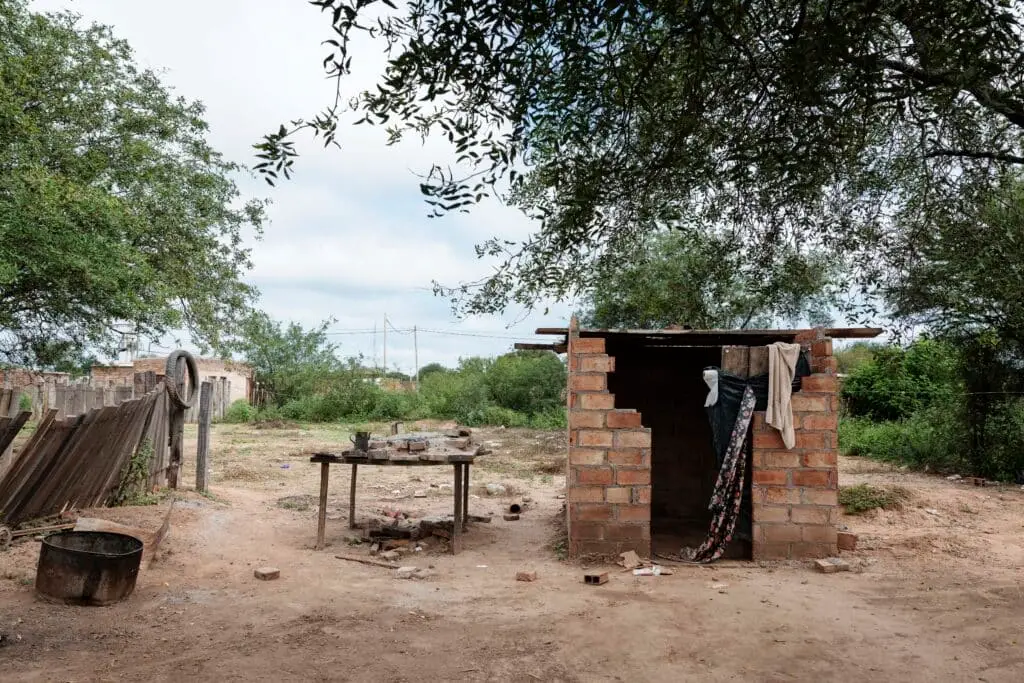
Bathroom in a family home in Monte Quemado, Santiago del Estero
In these contexts, early childhood becomes a central concern. The first years of life are not just another stage: they are the moment when the physical, emotional, and cognitive foundations of a person are built. When a child grows up malnourished, without health checkups, without proper stimulation or education, they suffer not only in the present: their future is shaped by it too.
That is why talking about child poverty should not only mean asking how many children live in households below a statistical threshold. It should also mean asking how they live, what they eat, where they grow up, and what real access they have to healthcare, education, care, and concrete opportunities to develop.
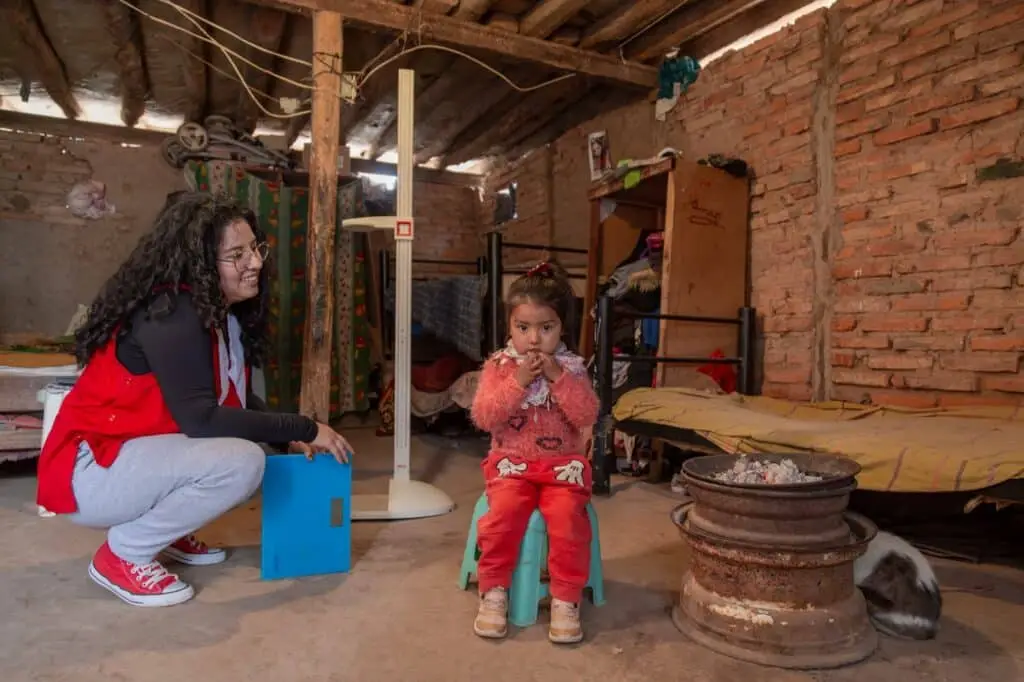
That is why, at Haciendo Camino, we work in territories where this poverty is plainly visible. According to a recent assessment we conducted on the families we support in the provinces of Santiago del Estero, Chaco, and Salta: 33% of mothers did not complete secondary school; 48% had their first child during adolescence; 16% of homes are built with precarious materials; 60% of families live in overcrowded conditions; 78% of household members are not up to date on medical checkups; 70% of women are not up to date on gynecological care; 30% of families have no refrigerator or adequate means of food storage; and 53% experience food insecurity.
More than isolated statistics, these figures show how poverty reproduces itself from one generation to the next. When a child grows up malnourished, without proper stimulation and amid persistent deprivation, their learning is affected from the earliest years. This often leads to school failure, then dropout, and later to precarious, low-paid work. New households are formed with unmet basic needs, and the cycle begins again.
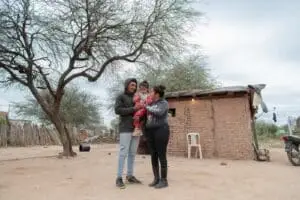
Lorena knows firsthand what it means to live in a context of extreme poverty. She lives in Barrio Luján, in Taco Pozo, Chaco, and every week she walks one hour to reach the Haciendo Camino Center, where she brings her son Antonio, one year and seven months old, to the Family Early Childhood Development Program. Antonio arrived underweight and with delays in his development, and for over a year he has been receiving nutritional follow-up, checkups, and support. In that space, Lorena also finds concrete help: nutritional care, tools to strengthen her son’s diet, information on early development for her baby, health education workshops, craft workshops, and essential supplies including milk, diapers, and food.
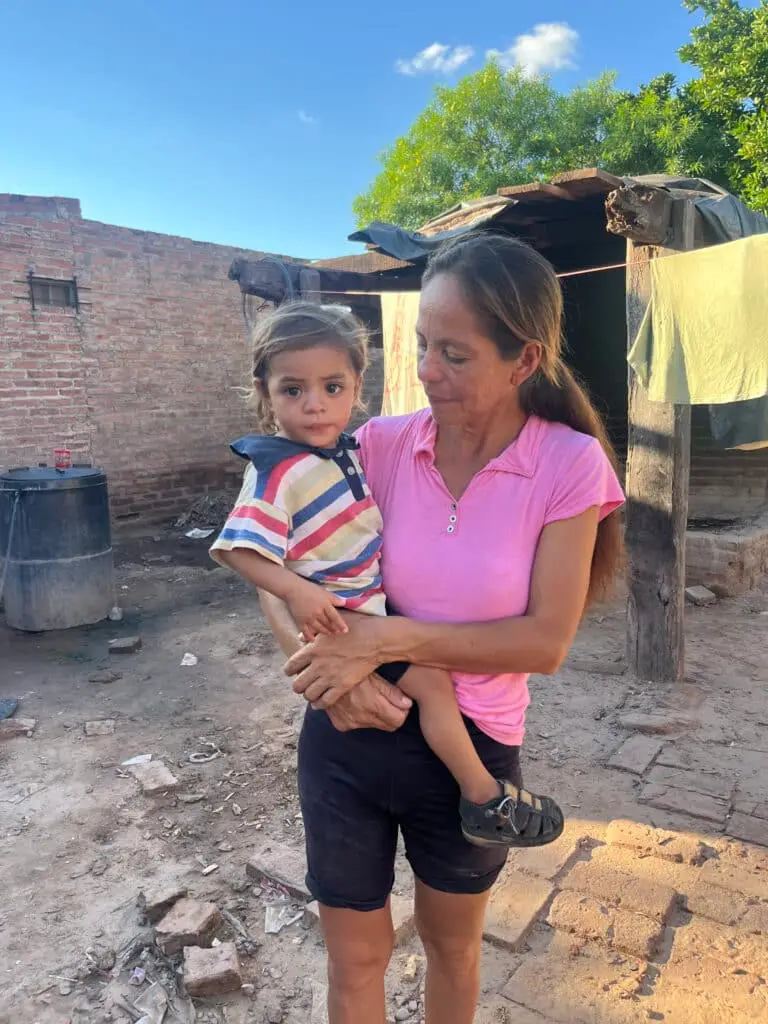
Lorena and Antonio, Taco Pozo, Chaco.
But the reality she faces extends far beyond that weekly walk. When Antonio needs specialized medical attention, Lorena has to travel to Resistencia, roughly 500 kilometers from Taco Pozo, because there is no pediatrician in her town, and she cannot find the care she needs in Sáenz Peña, 350 kilometers away. She lives with her husband, her children, and a granddaughter. Her husband does odd jobs to support the family, but when it rains the dirt roads make everything harder, and many times he cannot even leave to work. Sometimes, Lorena says, the food runs out. Toward the end of the month, she has to ask for help or borrow money to feed her children — and there are days when all she can give them is mate cocido with bread.
“There is a poverty that can only be understood when you walk the territory, when you enter the homes, when you meet the mothers and see everything they do to support their children in vulnerable circumstances,” says Catalina Hornos, Director and Founder of Haciendo Camino.
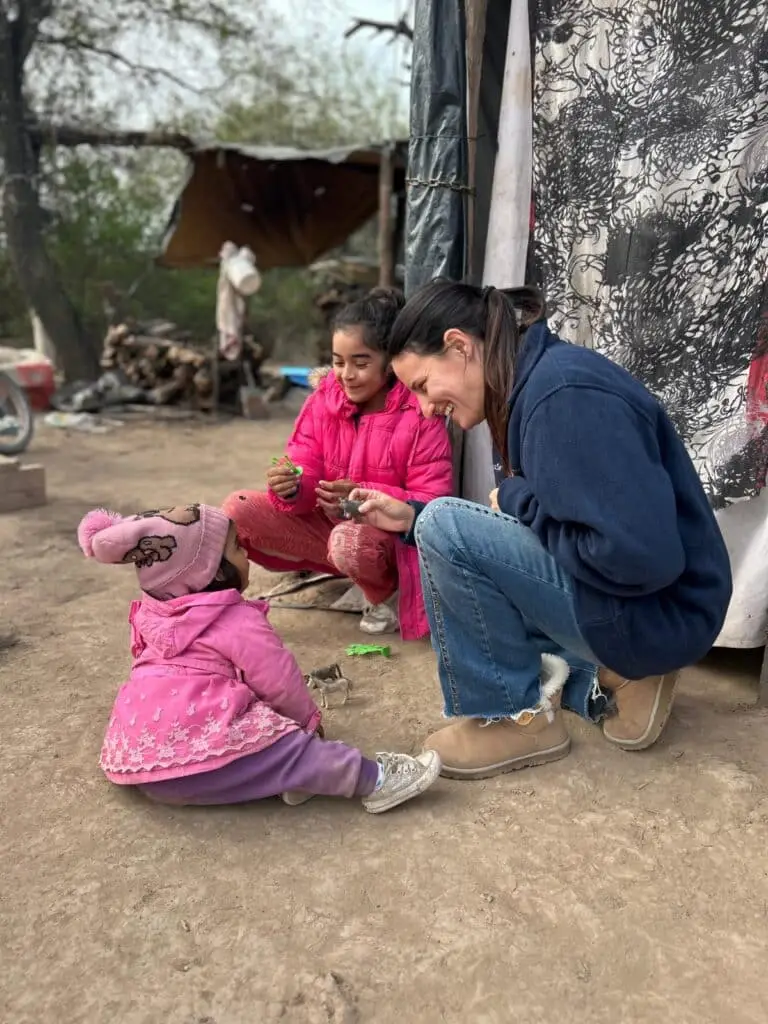
Catalina Hornos, Director and Founder of Haciendo Camino.
That is the poverty that is not always reflected in indicators — the kind that cannot be fully explained by a basic food basket, that persists even when the numbers change, and above all, the kind that shapes the present and, even more so, the future. If child poverty is not addressed in time, its consequences reach far beyond a semester’s measurement.
Faced with this reality, the challenge is not only to look at the data, but to commit to what is not shown. For nearly 20 years, we have worked to support children and families in contexts of extreme vulnerability in Santiago del Estero, Chaco, and Salta, through programs focused on nutrition, health, education, and family strengthening. Learning more about this issue, getting closer to the stories behind the numbers, and contributing to sustain this work are all concrete ways to help transform a reality that cannot wait.
Learn more at https://haciendocamino.org.ar/